
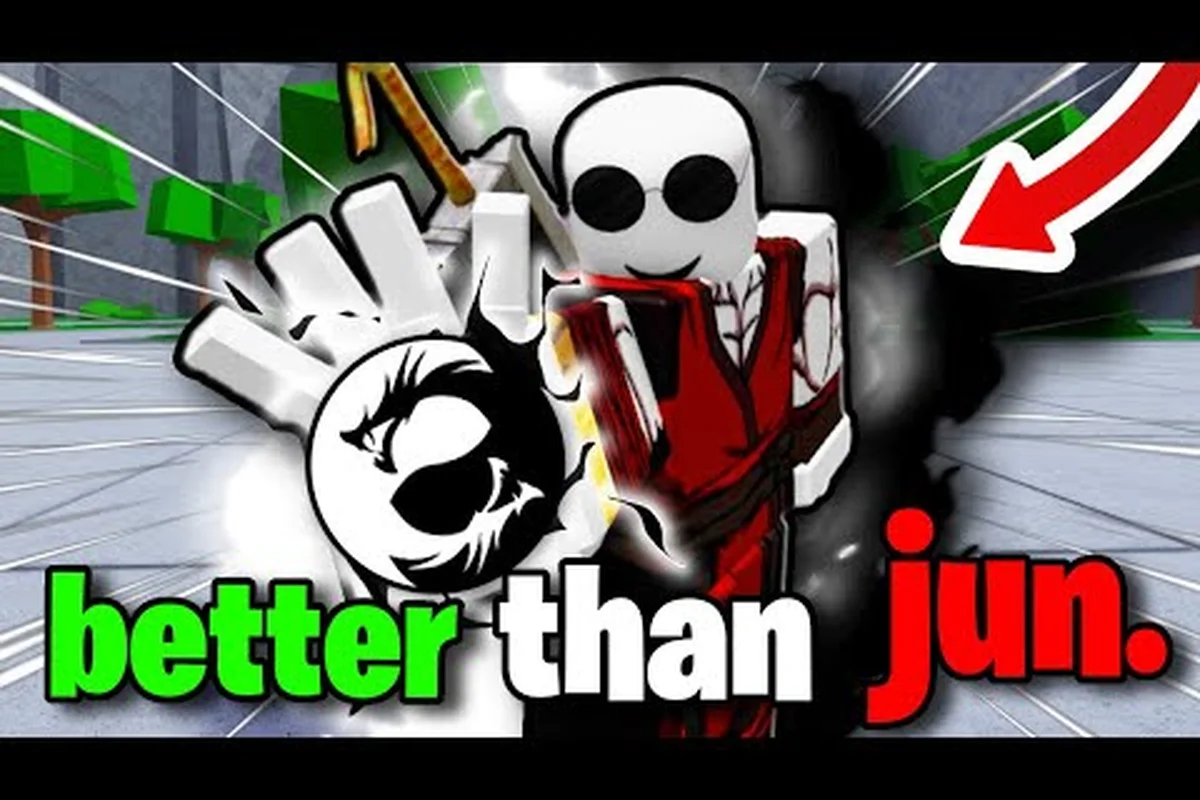
Jun sits in an odd spot in the Legends Battlegrounds roster: a free boxer-style fighter with a genuinely scary ultimate, yet a moveset that punishes sloppy spacing harder than most paid picks. If you have been asking how good is Jun in Legends Battlegrounds, the short answer is that he is a high-floor, medium-ceiling duelist who rewards fundamentals over flash.
That verdict matters because Jun is one of the first characters most players unlock, and the community keeps debating whether he is a starter trap or a legitimate ranked pick. This breakdown covers his No More Games ultimate, his combo routes, and the matchups that decide whether he belongs in your rotation.
What Makes Jun Tick in the Current Meta
Jun is built around a straightforward identity: close-range pressure with fast M1 chains and a burst ultimate that can flip a losing round. According to the Legends Battlegrounds Fandom community wiki, he is described as a free complete boxer-style fighter whose signature tool is the No More Games ultimate. That framing is accurate, but it undersells how much his value depends on your ability to land the first hit.
His kit leans on three pillars that define every serious Jun player: the speed of his M1 chain, the Q dash's recovery cancel, and the No More Games ultimate. Each pillar only pays off inside close range, so the real skill check is closing distance without eating a punish. Miss the dash cancel into block and a whiffed ultimate leaves you standing still for a free counter, which is exactly why Jun's tier swings so hard with matchup knowledge.
-
M1 chain speed — his light attacks come out quickly, which lets him pressure opponents who block too passively.
-
Q dash with recovery cancel — the dash doubles as an approach and an escape, and canceling into a block is what keeps Jun alive.
-
No More Games ultimate — a high-damage burst that closes rounds when it connects, but leaves him exposed if it whiffs.
The catch is that Jun has no reliable long-range poke. Everything he does requires him to walk into range, which means his tier placement swings wildly depending on how well you read your opponent's habits. Players who spam M1 without spacing get punished by any character with a fast counter or a long disjointed hitbox.
Why Jun Feels Stronger Than His Numbers Suggest
On paper, Jun's damage per hit is unremarkable. In practice, his strength comes from tempo control — the ability to force an opponent into a defensive rhythm and then break it with a dash-in. Community reports consistently note that Jun's win rate climbs sharply once a player learns to cancel his dash into block, because that single technique converts his aggression from reckless to sustainable.
That is the core of the "is Jun good" debate. He is not a character who wins through raw stats; he wins through decision-making. If you already understand fundamentals like whiff punishing and wake-up timing, Jun becomes a solid mid-tier duelist. If you do not, he feels like a worse version of every other boxer in the game.
Jun vs Shinji vs Martial Legend: The Real Comparison
The most common question after "how good is Jun" is how he stacks up against Shinji and the Martial Legend archetype. These three get compared constantly because they all occupy the aggressive melee niche, but their tools serve very different purposes. The table below summarizes the practical differences based on community testing and the current live build.
| Character | Range Profile | Ultimate Impact | Skill Floor | Best Use Case |
|---|---|---|---|---|
| Jun | Short | High burst, punishable on whiff | Low | Learning fundamentals, ranked climbing |
| Shinji | Short-to-mid | Strong finisher with setup | Medium | Aggressive duels, combo extensions |
| Martial Legend | Mid | Versatile, awakening-dependent | Medium-high | Flexible matchups, counterplay |
When players ask how good is Shinji in Legends Battlegrounds, the honest answer is that he offers a slightly higher ceiling than Jun at the cost of a steeper learning curve. Shinji's moveset rewards players who invest time into combo routes, while Jun rewards players who already understand spacing. If you want a deeper look at unlocking and piloting Shinji, the Shinji unlock and guide breakdown walks through his acquisition path and early combo options.
Where Martial Legend Fits In
The Martial Legend archetype plays differently from both boxers. It trades raw burst for awakening flexibility, meaning its power spikes later in a match rather than in the opening exchange. Players who ask how good is Martial Legend in Legends Battlegrounds usually want a character that scales into the late round, and that is exactly what this archetype delivers.
The tradeoff is that Martial Legend demands more precise awakening timing. If you pop awakening too early, you waste the power spike; too late, and you are already dead. Jun does not have that problem because his ultimate is a single decisive button rather than a sustained mode.
Ranking the Three for Duels
For pure 1v1 Duels, the practical ranking based on community consensus looks like this: Shinji sits at the top because his combo routes and cancel windows reward high execution, but that same ceiling makes him punishing to pilot when your inputs drop. Martial Legend lands in the middle as the most flexible pick, since his stance and tool coverage let you adapt mid-match rather than commit to one gameplan. Jun rounds out the trio as the most consistent — his straightforward normals and forgiving timing make him the safest pick for learning Duels fundamentals and for punishing opponents who get impatient and whiff.
-
Shinji — highest combo ceiling, best for players with execution.
-
Martial Legend — most flexible, best for adapting mid-match.
-
Jun — most consistent, best for learning and for punishing impatient opponents.
This ordering flips if you weight ease of use heavily. Jun is the easiest of the three to pilot competently, which makes him the best Duels character for newer players even though he is not the strongest at the top level.
How to Actually Win With Jun
Knowing that Jun is a solid mid-tier pick is not the same as knowing how to win with him. His game plan is narrow but effective: close the gap, force a block, then break the block with a dash-in. The table below breaks down his core combo routes and when to use each.
| Route | Input Pattern | Damage Tier | When to Use |
|---|---|---|---|
| Basic pressure | M1 x3 into dash | Low | Opening exchanges, testing reactions |
| Block break | Dash into M1 x2 into ultimate | High | When opponent turtles behind block |
| Punish | Block into M1 x2 into dash cancel | Medium | After reading a whiffed heavy |
The block break route is where Jun earns his keep. Most opponents default to holding block when pressured, and Jun's dash-in bypasses that habit cleanly. Once you condition an opponent to expect the dash, you can start mixing in dash cancels to bait their counter.
Managing the No More Games Ultimate
The No More Games ultimate is Jun's win condition, and misusing it is the single biggest mistake new players make. Its long startup and heavy recovery frames mean a whiffed activation leaves Jun standing exposed for a full punish, which is why the move is a liability at range or on a read. Two rules govern it:
-
Never open with it. The ultimate is punishable on whiff, so throwing it at full health gives your opponent a free round.
-
Save it for a confirmed hit. Land an M1 chain first, then cancel into the ultimate so it connects as part of a combo rather than a raw guess.
The distinction matters because of how Jun's kit is built: his M1 chain and dash-in routes generate the hit-confirm windows that make the ultimate safe, while his defensive options are too slow to create one from neutral. A player at 30% HP hoping the ultimate bails them out is really gambling on a raw activation — the same whiff-prone read the two rules above warn against — and against a competent duelist that gamble usually costs the round outright. Instead, bank it for the moment your opponent is already staggered or cornered, where the startup frames pass unpunished and the damage closes a round you were winning anyway. In practice this means Jun's ultimate rarely decides even matchups on its own; it converts advantages his neutral game earned, which is exactly why players who rate Jun highly tend to praise his confirm routes rather than the super itself.
Spacing and Dash Cancels
Jun lives and dies by his dash. The dash cancel into block is the technique that separates competent Jun players from struggling ones, because it lets him attack and defend in the same motion. If you dash in and immediately cancel to block, you can bait an opponent's counter and punish it.
This is also why Jun struggles against characters with long disjointed hitboxes. If your opponent can hit you before you reach dash range, your entire game plan collapses. Against those matchups, you have to play patient and wait for a whiff rather than forcing the approach.
Matchup Spread and Tier Placement
Jun's tier placement is not uniform across the roster. He dominates characters that rely on slow, telegraphed attacks and struggles against anyone who can out-range him. The table below reflects the general community consensus on his key matchups.
| Opponent Type | Difficulty | Why |
|---|---|---|
| Slow heavy hitters | Favorable | Easy to dash in during their recovery frames |
| Fast counter characters | Unfavorable | They punish your dash-in before it lands |
| Long-range zoners | Very unfavorable | You cannot close the gap safely |
| Mirror Jun | Even | Pure fundamentals check |
The pattern is clear: Jun beats characters who commit to big moves and loses to characters who punish commitment. That makes him a reactive duelist rather than a proactive one, which is a subtle but important distinction when you are deciding whether to main him.
Is Jun Worth Main-ing?
If your goal is to climb ranked Duels steadily, Jun is a reasonable main because his fundamentals transfer to other characters. If your goal is to dominate at the highest level, you will eventually want to move to Shinji or a Martial Legend build with a higher ceiling. Jun is a great teacher and a decent competitor, but he is not a tournament-winning pick on his own.
The Shinji update and rework coverage is worth reading if you are considering a switch, because recent balance changes have shifted how the top-tier melee characters interact. If you want to know how good Shinji is, the practical takeaway is that his reworked kit now punishes the exact mid-range spacing Jun relies on, so a Jun main who has not learned to close distance or bait out Shinji's dash will lose the matchup more often than the raw tier list suggests. Read the breakdown before you commit to a second main, and weigh whether the swap actually fits your Duels playstyle.
Practical Tips for Jun Players
Beyond the core game plan, a few habits separate winning Jun players from losing ones. These come from community reports and repeated testing in live Duels. The biggest differentiator is dash-cancel discipline: Jun's dash recovery is fast enough to bait a whiffed punish, but only if you cancel into a block or backdash within roughly the first few frames — mistime it and you eat a full combo instead. Meter management matters just as much, since No More Games is a commitment tool, not a panic button; burning it at low health without a confirmed kill usually hands the round to your opponent. Finally, round-one patience pays off because Jun lacks a safe long-range opener, so reading habits before committing to aggression consistently outperforms forcing early exchanges.
-
Practice the dash cancel in the training lobby before taking it into ranked, because the timing window is tight.
-
Watch your ultimate meter and avoid using No More Games below 30 percent health unless it is a guaranteed kill.
-
Play the first round defensively to read your opponent's habits, then switch to aggression once you know their patterns.
-
Avoid openers against long-range characters; let them come to you and punish their approach.
-
Learn one reliable combo rather than five shaky ones, since consistency beats variety in Duels.
These habits matter more than any single tech, because Jun's strength is decision-making rather than execution. A patient Jun player who waits for the right opening will beat a flashy one who forces every exchange. The reason is structural: Jun's kit lacks a fast, safe panic option, so every commitment carries real risk, and the player who chooses fewer, better commitments simply takes fewer losses. In practice, this means treating each round as a resource puzzle — track your opponent's meter, note whether they respect your dash-cancel bait, and only spend No More Games when the follow-up is guaranteed. A Jun who wins by forcing three clean openings per round will climb faster than one chasing highlight-reel combos, because consistency compounds across a Duels set while flashy reads do not.
Reading Your Opponent
The single biggest skill gap in Jun play is opponent reading. Because Jun has no ranged options, every engagement is a commitment, and committing at the wrong time loses rounds. Spend the first exchange of every match observing whether your opponent blocks on approach, counters on reaction, or backs off. That information tells you which combo route to use for the rest of the match.
If they block, use the block break route. If they counter, bait with dash cancels. If they back off, pressure with M1 chains and force them to the corner. Jun's kit is simple enough that the entire matchup is decided by which of these three habits your opponent falls into.
Frequently Asked Questions
Is Jun good in Legends Battlegrounds?
Yes, Jun is a solid mid-tier duelist with a low skill floor and a punishing ultimate. He is not the strongest character at high-level play, but he is one of the most consistent picks for players learning fundamentals, and his No More Games ultimate can close rounds decisively when used as a finisher rather than an opener.
How good is Shinji compared to Jun?
Shinji has a higher combo ceiling and rewards execution-heavy play, while Jun rewards spacing and decision-making. Community consensus places Shinji above Jun for top-level Duels, but Jun is easier to pilot competently, which makes him the better starting pick for most players.
How good is Martial Legend in the current meta?
Martial Legend is a flexible archetype that scales into the late round through awakening timing. It sits between Jun and Shinji in terms of raw power, offering more matchup versatility than Jun but demanding more precise awakening management than either boxer, so it suits players who adapt mid-match.
What is the best Duels character for beginners?
Jun is the best Duels character for beginners because his moveset is simple, his ultimate is a single decisive button, and his fundamentals transfer to other characters. Players who master Jun's dash cancel and block break routes can climb ranked steadily before switching to a higher-ceiling pick like Shinji.
Should I main Jun or switch to Shinji?
Main Jun if you want to build fundamentals and climb consistently with a forgiving kit. Switch to Shinji once your execution is strong enough to exploit his higher combo ceiling. Many players keep Jun as a comfort pick and use Shinji for matchups where raw burst matters more than spacing control.
Final Verdict on Jun
Jun is neither a hidden top-tier nor a starter trap. He is a well-designed fundamentals character whose value scales directly with the player behind him, and that is exactly why the "how good is Jun" question keeps resurfacing in the community. His No More Games ultimate gives him a real win condition, his dash cancel gives him defensive depth, and his matchup spread is predictable enough to plan around.
If you are deciding where to invest your time, treat Jun as a training ground that doubles as a legitimate ranked pick. Master his spacing, learn his block break route, and save the ultimate for confirmed hits. Do that, and Jun will carry you further than his tier placement suggests.