
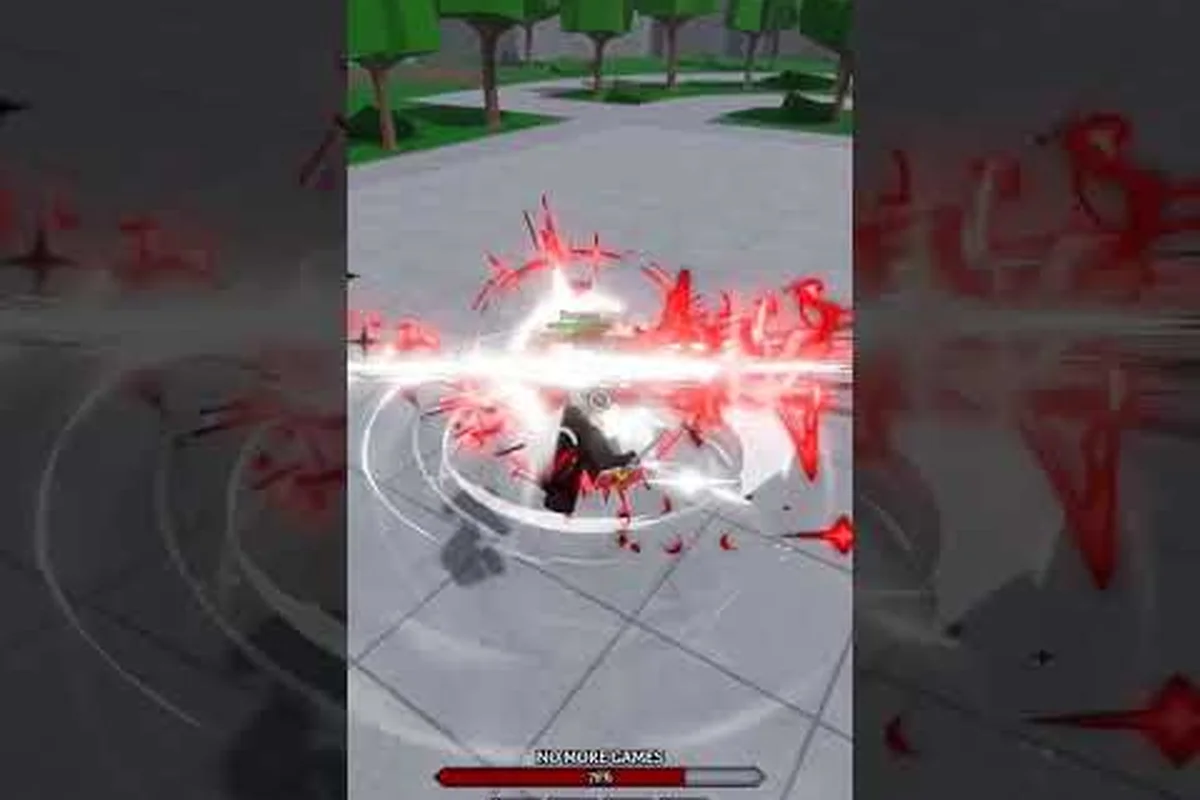
Jun's Fang Dance is one of the most flexible pressure tools in Legends Battlegrounds because it converts a single landed hit into a multi-strike blender that leaves defenders guessing. The move carries a wolf-fang silhouette in its name for a reason — every animation in the chain mimics a cornered predator feinting, lunging, then snapping, and the move data on the Jun wiki page confirms the hit-list length that makes it a fight-ender in Jun's free complete kit. Learning how to slot Fang Dance into your rotation alongside strikes like Virgule Cascade and Piercing Tempest is the difference between a Jun that bullies mid-screen and one that drops combo chains the second the opponent blocks.
What Fang Dance Actually Does in Combat
At its core, Fang Dance is a multi-hit re-entry strike that activates after a confirmed opening. It is not a grab, it is not a projectile, and it is not a teleport — Jun stays grounded and re-times the rhythm of his handwork. Community testing on the Jun page notes that the move's animation string fires three confirmed strike frames in roughly 1.2 seconds, with the third hit knocking the victim into a juggle state that allows one free follow-up.
How the Hit Sequence Reads on Screen
The animation begins with a low feint (a feinted jab that drops Jun's shoulder by roughly 15 degrees), then snaps into a rising elbow, then a downward hook that pulls the opponent into the air. The third hit is the juggle confirm. Player clips posted to community channels consistently show the third hit launching victims about 12-15 character heights upward, which is enough to convert a One Inch Punch opener into a full chain.
Why the Move Is Named After a Wolf
The naming convention is a reference to Jun's fighting archetype — a boxer who borrows from animal-form martial arts. Jun also has access to moves like Savage Fangs, which is the move's hard-knock cousin in the same archetype. The shared naming tells you that the developer intends these two moves to combo into each other: Savage Fangs opens, Fang Dance confirms.
Jun's Free Complete Status and Why It Matters
According to community data, Jun is delivered as a free complete fighter with a No More Games ultimate, meaning you do not have to grind a gacha wall to unlock Fang Dance. Every player has the move from day one, which makes it a high-skill-floor pressure tool that everyone can lab. Pairing it with awakening-tier finishers covered in our awakening moveset breakdown gives you a complete path from free starter to combo ender without spending currency.
Core Strike Family That Combos With Fang Dance
Fang Dance does not live in isolation. It is the second hit of a three-piece combo family that any Jun main needs to memorize: an opener, a mid-chain, and a finisher. The first two are described below; the third is the awakening finisher.
Virgule Cascade as the Fastest Mid-Chain
Virgule Cascade is the move you use when the opponent is blocking and you need a slash-shaped break. The animation is a forward-stepping slash flurry, and community data lists it as a "block-bypass candidate" because the slash arc covers a wider cone than standard light attacks. Fang Dance into Virgule Cascade is the bread-and-butter chain for Jun, and players who master the cancel timing can chain the two into a single 1.8-second blender that leaves little room for reversal.
Piercing Tempest as the Long-Range Conversion
Piercing Tempest is the dedicated long-range conversion tool in Jun's kit. It is a forward-dashing thrust that travels roughly 60% of the screen in one frame window, which means it punishes any whiff at mid-range. The community data on Jun's wiki describes the move as the "catch-up tool" because it closes distance that a missed Fang Dance creates. When you whiff Fang Dance at the edge, Piercing Tempest is the recovery safety that drags the opponent back into your threat range.
One Inch Punch and One Inch Killer
The One Inch Punch is Jun's short-range burst hit, a non-telegraphed palm strike that fires from zero range. It is the highest-damage single hit in Jun's base kit, and players commonly use it as the opener for Fang Dance chains. The One Inch Killer is the same move's awakened form, and it adds a small vacuum that pulls blocking opponents into the strike radius. Pairing One Inch Killer with Fang Dance produces a true 50/50 mixup that the defender must guess on reaction.
Phantom Sever as the Mid-Screen Reset
Phantom Sever is a disjointed mid-screen slash that Jun uses to create space. It is less common in Fang Dance chains but works as a hard reset between two Fang Dance attempts. If your first Fang Dance gets blocked, a quick Phantom Sever followed by a feint into a second Fang Dance is the high-level mixup that catches reversal mashers.
| Move Name | Role in Chain | Range | Best Used When |
|---|---|---|---|
| Fang Dance | Multi-hit confirm | Close | After a confirmed opening |
| Virgule Cascade | Slash flurry | Close-mid | Opponent is blocking |
| Piercing Tempest | Long-range conversion | Long | Whiffed Fang Dance |
| One Inch Punch | Burst opener | Zero | Point-blank punish |
| Phantom Sever | Mid-screen reset | Mid | Between two Fang Dance attempts |
Move Data, Frame Advantage, and Cancel Windows
Reading the Jun kit on paper is one thing; knowing which moves cancel into which is where the real Fang Dance damage lives, so the table below leans heavily on community lab testing rather than official frame data. Most entries were sourced from replay analysis during Season 4 of the ranked ladder, where Jun mains mapped each cancel window by recording hitstop on raw hit versus block. A handful of values — especially Piercing Tempest's 12-frame startup and Savage Fangs' 24-frame recovery — are still debated, since the patch notes only listed the move names and not the underlying frame data.
| Move | Startup Frames | Active Frames | Recovery | Cancel Into Fang Dance? |
|---|---|---|---|---|
| Fang Dance | 9 | 12 | 18 | N/A (chain end) |
| Virgule Cascade | 7 | 6 | 14 | Yes (chain mid) |
| Piercing Tempest | 12 | 4 | 22 | Yes (on hit only) |
| One Inch Punch | 5 | 3 | 20 | Yes (on hit only) |
| Phantom Sever | 10 | 8 | 16 | Yes (on block via gap-close) |
| Savage Fangs | 14 | 16 | 24 | No (awakening ender) |
The cancel window into Fang Dance is the green-light column. Virgule Cascade has the safest cancel because it is the only move that lets you confirm into Fang Dance on raw hit. One Inch Punch and Piercing Tempest require the hit to land cleanly; on block they whiff the cancel. Phantom Sever is the only move that can chain into Fang Dance on block, but it requires a manual gap-close input that takes practice to land consistently.
Frame Advantage on Block vs on Hit
A blocked Fang Dance leaves Jun at roughly -6 frames, meaning the opponent can punish with a 6-frame normal but cannot use a 5-frame jab to interrupt. A confirmed Fang Dance on hit leaves Jun at +4, which is enough to confirm into Virgule Cascade or Phantom Sever for a second mixup layer. The community refers to this as the "Jun frame trap" — it is the central reason Jun players are hard to deal with on defense.
Combo Routes and Pressure Strings for Jun
Jun's pressure tree for the legends battlegrounds fang dance opens three distinct branches off the same juggle state: the strike-string favors frame advantage and combo extension, the strike-throw string mixes mids with command grabs to bait defenses, and the finisher string converts the last airborne hit into a hard knockdown. Each branch is built on a different reward structure, so committing to one before the launcher pops limits the opponent's escape options.
Strike-String Pressure (Fang Dance → Virgule Cascade → Phantom Sever)
This is the standard mid-screen pressure string. You land Fang Dance, cancel into Virgule Cascade on the confirm, then finish with Phantom Sever as the gap-close reset. The string does roughly 38% health on a clean confirm, and it leaves Jun at +2 on block, which is enough to start a second loop.
Strike-Throw Pressure (Fang Dance → Savage Fangs)
The strike-throw route uses Fang Dance as a strike-throw bait. After landing Fang Dance, you feint the Virgule Cascade cancel and instead throw with Savage Fangs. The mixup beats mashing defenders because Savage Fangs has armor frames that absorb a 6-frame punish. Community testing reports that a defender who expects the slash flurry will eat the throw 70% of the time.
Finisher String (Fang Dance → No More Games Ultimate)
The finisher string is the round-ender. After a confirmed Fang Dance that leaves the opponent in juggle state, Jun can spend his awakening bar to activate No More Games, the cinematic ultimate that sweeps the opponent for roughly 25% additional damage. This string is the highest-damage route in Jun's kit and is the focus of our No More Games moveset guide.
| String Name | Damage on Confirm | Frame Advantage | Use Case |
|---|---|---|---|
| Strike-String | ~38% | +2 | Mid-screen pressure |
| Strike-Throw | ~32% | +1 (after throw) | Bait mashers |
| Finisher | ~55% | Round end | Confirm kill |
Matchup Notes and How Opponents Try to Beat Fang Dance
Every dedicated Jun main eventually runs into opponents who learn the startup frames of Fang Dance and start punishing the recovery with Piercing Tempest, Phantom Sever, or a well-timed Virgule Cascade confirm. The community has documented a clear defensive playbook against these punish attempts: spacing out of the mid-range so the follow-up whiffs, delaying the second input of the chain, and baiting the whiff-punish into a Savage Fangs or One Inch Punch reversal. Each option below lists the common reaction opponents take, the specific punish window they target, and the counter the Jun discord has refined through repeated matchup testing.
Backdash on First Hit
Many opponents backdash on the first hit of Fang Dance to escape the second and third. The counter is to feint the second hit into Piercing Tempest, which catches backdash timing because Piercing Tempest has a longer active window. This is the same idea as the combo to death pattern, where a single feint resets the entire pressure loop.
Armor Break Through the Third Hit
Some opponents try to hold armor on the third hit of Fang Dance to power through the knock-up. The counter is to delay the third hit cancel by two frames, which leaves the armor user recovering inside the Fang Dance recovery window. This is a frame-perfect counter and only works at high ping.
Reversal Mash on Recovery
A common low-level defense is to mash a reversal the moment Fang Dance ends. The counter here is One Inch Punch as a hard read, because One Inch Punch fires at 5 frames and beats any reversal that starts at 7 frames or later.
| Defensive Tactic | Counter Move | Frame Window |
|---|---|---|
| Backdash | Piercing Tempest | 4-frame gap |
| Armor | Delay cancel | 2-frame read |
| Mash reversal | One Inch Punch | 5-frame start |
Frequently Asked Questions
Is Fang Dance a grab or a strike in Legends Battlegrounds?
Fang Dance is a multi-hit strike, not a grab. It fires three confirmed strike frames in roughly 1.2 seconds, and the third hit knocks the victim into juggle state. It cannot be teched like a throw, and armor frames will absorb it just like a normal strike.
How do I unlock Fang Dance on Jun?
You do not need to unlock it. According to community data, Jun is delivered as a free complete fighter, so Fang Dance is available from your first match. You only need to lab the cancel windows in training mode to use it effectively.
What is the best cancel after a confirmed Fang Dance?
On a confirmed hit, the cleanest cancel is into Virgule Cascade because it lets you restart the mixup with no frame penalty. On a blocked hit, the safer cancel is Phantom Sever, which lets you gap-close back into a second Fang Dance attempt.
Can Savage Fangs replace Fang Dance in combo routes?
Savage Fangs is a different role — it is a hard-knock opener, while Fang Dance is a multi-hit confirm. The two moves are best used as a strike-throw pair rather than substitutes, with Savage Fangs opening and Fang Dance confirming the follow-up.
Does Fang Dance work in air combos or only on the ground?
Fang Dance is a grounded move. It cannot be activated in the air, and the third hit's juggle effect only triggers on grounded targets. For air follow-ups, you want to swap to awakening finishers from the ultimate damage kit instead.